
English
Views: 0 Author: Site Editor Publish Time: 2026-02-23 Origin: Site
When it comes to using aluminum telescopic poles for a variety of tasks, from cleaning tall windows to performing industrial inspections, the design and functionality of the locking mechanism play a crucial role in ensuring performance, safety, and efficiency. Among the different locking systems available, flip-lock mechanisms are increasingly popular due to their ease of use, security, and reliability. This article explores the primary performance benefits of flip-lock mechanisms in extension poles and why they are essential for both professional and everyday use.
One of the most notable features of flip-lock systems is their ability to provide quick adjustments to the length of the extension pole. Unlike twist-lock or push-button mechanisms, the flip-lock mechanism allows users to extend and retract the pole in a matter of seconds. This is especially beneficial in situations where the pole needs to be adjusted frequently, such as when cleaning hard-to-reach areas or performing inspections at different heights.
The mechanism works by using a lever or clamp that secures the pole at the desired length. With just a flip of the lock, the extension pole can be adjusted or locked in place with minimal effort, improving overall efficiency and reducing downtime during work. This quick adjustment ability makes flip-lock systems a preferred choice for professionals who need to adjust their tools without compromising on security or safety.
In addition to the speed of adjustment, flip-lock systems also provide a stronger, more secure grip compared to twist-lock systems. The simple, mechanical design ensures that the pole stays securely locked in place, preventing any unexpected movement or collapse during use. This is particularly important when working at height, where the stability of the pole is critical for the safety of the worker.
Security is another critical aspect of flip-lock systems. A secure locking mechanism ensures that the pole stays firmly in place once adjusted, preventing accidental collapse or slippage during use. This is particularly important when working at height, where a malfunctioning pole could lead to dangerous situations. Flip-lock systems offer very high security, locking the sections of the pole tightly and reliably.
Whether the task involves painting a tall wall, cleaning windows, or performing any other task requiring an extended reach, knowing that the pole will remain locked in place is crucial for worker safety. The security provided by flip-lock mechanisms gives users confidence in their equipment, allowing them to focus on their task without worrying about their tools.
A reliable lock also reduces the need for frequent adjustments during use. Unlike other mechanisms that might require users to twist or press buttons repeatedly, flip-lock systems provide a simple, fast, and secure adjustment process that minimizes downtime. This added efficiency translates into faster work and increased productivity, which is highly valuable in professional environments where time is essential.
When comparing flip-lock mechanisms to other popular locking types, such as twist-lock and push-button systems, it’s essential to examine the trade-offs in terms of speed, security, ease of use, and adjustment precision. The table below outlines these differences:
Feature | Flip Lock | Twist Lock | Push Button |
Speed | ✓ Fast | ✓ Medium | ✓ Fast |
Security | Very High | Medium | Medium |
Ease of Use | Easy | Moderate | Easy |
Adjustment Precision | High | Medium | Low |
From the table, it is clear that flip-lock mechanisms excel in terms of both security and adjustment precision, making them the ideal choice for tasks where stability and fine control are crucial. The quick adjustment and ease of use also make them superior to twist-lock mechanisms, which can be slower to adjust, and push-button systems, which often provide less precise control.
Flip-lock systems ensure that users have the flexibility to make adjustments quickly without compromising the security or stability of the pole. In contrast, twist-lock and push-button systems often require more effort to secure the pole, which can lead to instability or the need for additional adjustments during use. This makes flip-lock systems not only more convenient but also safer and more reliable for tasks that demand high precision.
For professionals who use extension poles daily, the flip-lock mechanism offers several advantages that enhance performance. These advantages are critical when working in demanding environments, where both safety and efficiency are paramount.
The stability provided by flip-lock systems is one of the most significant benefits for professionals. Whether the task requires extended reach or constant height adjustments, a secure, reliable lock prevents the pole from shifting or collapsing during use. This stability is especially important when performing delicate tasks, such as painting or cleaning high surfaces, where even a small movement could affect the quality of the work.
For example, when performing window cleaning or building inspections, the extension pole is often extended to a significant height. The stability of the pole is crucial to ensuring that the worker can confidently perform their task without the risk of the pole collapsing unexpectedly. With flip-lock mechanisms, users can trust that their tools will stay securely in place, allowing them to focus on completing their tasks efficiently and safely.
Accidental collapse is a concern when using any extension pole, especially if the locking mechanism fails or loosens over time. Flip-lock systems drastically reduce this risk by providing stronger locking than twist-lock or push-button mechanisms. The lock is designed to stay firmly in place, ensuring that the pole doesn’t collapse under the weight of the user or the tool. This feature is especially beneficial for those who regularly use extension poles in high-risk environments, such as in construction or maintenance work.
The reliability of the flip-lock mechanism also means that workers can adjust the height of the pole without worrying about the rod suddenly sliding down. This added security not only increases the worker’s confidence but also reduces the chance of accidents that can occur due to faulty or insecure locking systems.
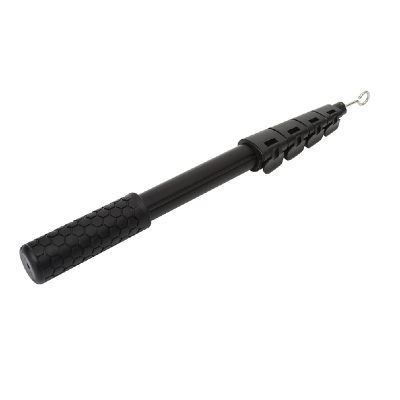
A reliable locking mechanism improves worker confidence when using extension poles in demanding or high-risk environments. When workers are confident that their equipment is secure and won’t fail, they can focus more on their task, reducing distractions and potential errors. This increased confidence in the tool’s performance translates to better results and a safer working environment.
Confidence in a tool’s reliability and stability directly impacts the worker’s overall performance. With a flip-lock mechanism, workers can quickly and easily adjust the pole without worry, knowing that the tool will remain stable throughout the job. This allows them to complete their work faster and with more precision, which is especially important in professional settings where time is valuable and mistakes can be costly.
Flip-lock mechanisms also contribute to less downtime during work. The ability to quickly adjust the length of the pole with minimal effort means that workers spend less time fiddling with the equipment and more time performing their tasks. This is especially crucial in time-sensitive projects or jobs that require frequent height adjustments. Reducing the time spent adjusting the pole allows workers to complete their tasks more efficiently, increasing overall productivity.
For instance, when working in construction or maintenance, workers often need to adjust the height of their extension pole several times during a single task. The faster this adjustment can be made, the more time workers have to focus on the core aspects of their work, thus increasing overall productivity and reducing job completion times.
While flip-lock mechanisms are widely regarded as the most reliable and secure locking system for extension poles, there are still some misconceptions that may lead to confusion among users.
One common misconception is that flip-lock mechanisms are more prone to failure compared to twist-lock or push-button systems. In reality, flip-lock systems provide stronger, more reliable locking, especially when it comes to securing the pole at a set height. While twist-lock systems can become loose over time due to wear and tear, flip-lock systems are designed to stay securely locked without requiring constant adjustment or maintenance.
Another misconception is that flip-lock poles are harder to adjust or require more effort than twist-lock or push-button poles. In fact, flip-locks are faster and easier to use, providing a quick, secure adjustment with minimal effort. This makes them the preferred choice for professionals who rely on efficiency and ease of use in their daily work.
In conclusion, the flip-lock mechanism provides several performance advantages that make it the top choice for extension poles in both professional and everyday use. The quick adjustment, secure locking, and high stability offered by flip-lock systems make them ideal for tasks that require precise control and safety. By reducing the risk of accidental collapse and increasing productivity, flip-lock systems enhance both worker confidence and performance.
For businesses looking for durable, efficient, and reliable extension poles, flip-lock systems offer the perfect combination of features that ensure long-lasting performance. Contact us today to explore our range of extension poles equipped with advanced flip-lock mechanisms, designed to provide the ultimate reliability and efficiency for all your industrial and professional needs.
1. How does a flip-lock mechanism work in extension poles?
A flip-lock mechanism uses a lever or clamp to secure the pole at the desired length. It allows for quick adjustments and provides a secure lock to prevent accidental collapse during use.
2. Why is the flip-lock system preferred over other locking mechanisms?
The flip-lock mechanism offers superior security, adjustment precision, and ease of use compared to other systems, such as twist-lock or push-button mechanisms, making it ideal for professional use.
3. How does a flip-lock system improve safety?
Flip-lock systems provide a secure lock that prevents the pole from collapsing during use, reducing the risk of accidents or injuries, especially when working at height.
4. What industries benefit the most from using extension poles with flip-lock mechanisms?
Flip-lock mechanisms are ideal for industries such as construction, maintenance, window cleaning, and painting, where stability, safety, and frequent height adjustments are required.


