English
Views: 0 Author: Site Editor Publish Time: 2026-07-04 Origin: Site
Poor signal reception, heavy static, and dropped frequencies constantly frustrate radio users, hobbyists, and field technicians. You twist the dial hoping for clarity, but the annoying hiss persists. Many people immediately assume their expensive receiver is failing and needs a replacement. However, the true bottleneck often stems from an inadequate or heavily damaged stock antenna.
When an antenna's physical length fails to match the target frequency's specific wavelength, signal capture drops drastically. Similarly, degraded hardware ruins conductivity. Joint wear, rust, and loose hinges destroy your listening experience.
In this guide, we explore the precise mechanics of nested antennas. We explain how adjustability dictates signal clarity. You will discover an evidence-based framework for evaluating hardware upgrades. Finally, we share practical workarounds to easily boost reception on older portable units lacking external ports.
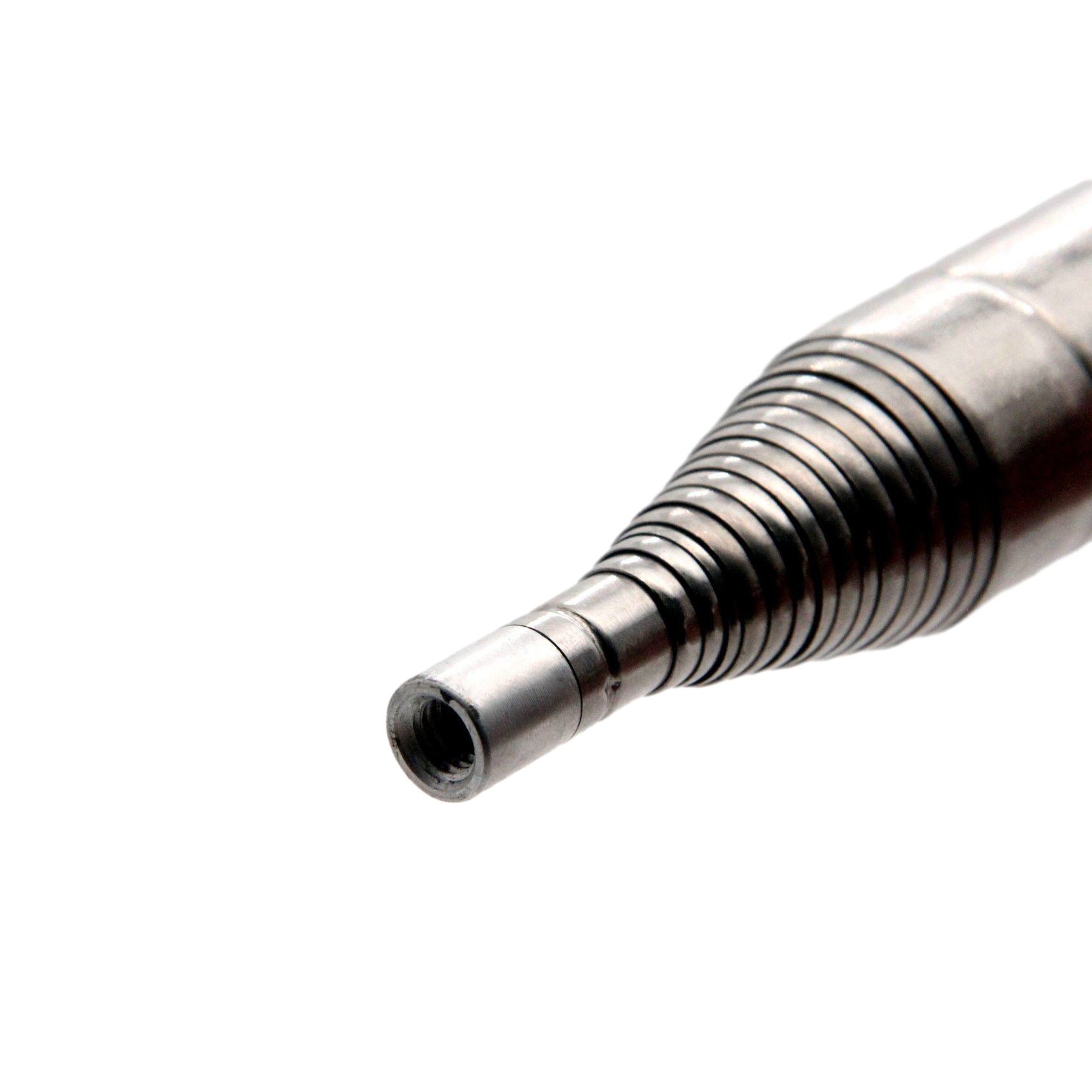
At its core, a telescopic antenna is an omnidirectional or directional receiver component. It consists of interlocking, nested metal tubes. You can extend or collapse these tubes to change the physical length of the mast.
This design serves a very specific physics requirement. Radio waves require an antenna length corresponding to a fraction of their wavelength. Engineers call this physical resonance. Most portable radios operate using a 1/4 wave or 1/2 wave antenna design. When you physically match the antenna length to the mathematical wavelength of the broadcast, you achieve maximum signal resonance. The antenna captures the electromagnetic energy efficiently.
The base structure also plays a vital role. High-quality models feature a robust hinge and swivel mechanism. This base allows you to rotate and angle the mast freely. Capturing polarized signals requires this articulation. FM and VHF bands rely heavily on line-of-sight transmission. Adjusting the angle helps align the receiver with the incoming waveform phase.
However, implementation reality introduces mechanical wear. The interlocking tubes rely on tight friction fits. Over time, these friction-fit tubes degrade. Dust, moisture, and repeated collapsing erode the inner metal contacts. This wear leads to severe signal loss at the joints. You might notice static increasing when you wiggle the extended segments. This indicates physical degradation inside the mast.
Adjustability is not just a storage convenience. It acts as a physical tuning mechanism. Your ability to manipulate the mast directly influences clarity and gain.
Different broadcasting bands require different physical lengths for optimal capture. You must adjust the mast based on what you want to hear.
Moving the antenna alters its spatial relationship to the transmitter. Adjusting the tilt can immediately reduce background noise. It also mitigates multipath interference. Multipath interference happens when radio waves bounce off concrete buildings or hills. They arrive at your receiver at slightly different times. This creates an echoing effect or heavy static. By tilting the mast, you change the polarization match. This rejects the bouncing signals and isolates the direct broadcast.
You must understand the limitations of physical upgrades. A nested mast is a purely passive component. It does not require power. Consequently, it cannot amplify a non-existent signal. It also cannot bypass severe geographic or structural dead zones. If you sit deep inside a steel-reinforced concrete building, upgrading the passive mast will not magically fix your reception. You need an active amplifier or an outdoor external aerial to solve environmental dead zones.
Consumers face a common business problem when buying portable radios. Original Equipment Manufacturers (OEMs) cut costs on accessories. Factory antennas often utilize cheap, thin brass covered by basic chrome plating. This material snaps easily at the base hinge after minimal use.
Upgrading to a stainless steel telescopic antenna resolves these structural flaws. Stainless steel offers vastly higher tensile strength. It heavily resists environmental corrosion. More importantly, it maintains tension in the nested joints far longer than brass. Field equipment, emergency radios, and marine electronics benefit immensely from this material upgrade.
Plated brass does offer better theoretical conductivity. However, it remains highly prone to metal fatigue. It bends under slight pressure. The thin plating flakes off, exposing the reactive brass to moisture. This leads to rapid oxidation and snapped hinges.
| Material Type | Durability & Strength | Corrosion Resistance | Joint Tension Retention | Ideal Use Case |
|---|---|---|---|---|
| Stainless Steel | Very High | Excellent | Long-lasting | Outdoor, marine, rugged field use |
| Chrome-Plated Brass | Low to Moderate | Poor (once plated) | Degrades quickly | Indoor, stationary desktop radios |
When you shop for a replacement, evaluate these specific dimensions:
Many users encounter the "no-socket" dilemma. Portable emergency receivers often rely exclusively on their built-in radio telescopic antenna. Manufacturers omit dedicated ports for external upgrades to save space. You cannot simply screw on a larger mast. However, you can bypass this hardware limitation using basic coupling techniques.
You can artificially extend the signal capture area using a long wire. Cut 10 to 20 feet of standard insulated copper speaker wire. Strip one inch of insulation off the end. Attach a metal alligator clip to the exposed copper. Clip this directly onto the existing metal mast of your radio. Run the rest of the wire horizontally across your room or drape it near a window. The wire acts as a massive extension of the mast, dramatically boosting shortwave and FM capture.
Sometimes you cannot use an alligator clip safely. You can use inductive coupling instead. Take insulated copper wire and wrap it tightly around the existing metal mast 10 to 15 times. Do not strip the wire. Leave the plastic insulation intact. The wire makes no direct electrical contact with the mast. However, the electromagnetic energy transfers seamlessly between the wire coil and the internal mast. Route the other end of the wire outside.
Exercise extreme caution when routing wires outdoors. You must manage static discharge and lightning risks. Attaching long outdoor wires to ungrounded portable radios invites danger. A nearby lightning strike can travel down the wire and destroy your radio. It can also cause fatal shocks or fires. Always disconnect homemade wire extensions during thunderstorms. Use proper grounding blocks if you plan to leave wire arrays outdoors permanently.
Replacing an underperforming mast requires a logical approach. Follow this structured framework to select the perfect upgrade for your specific receiver.
A fully functional nested antenna remains the single most critical, user-adjustable component for clear signal reception. Adjusting the physical length and polarization angle immediately drops background noise. It pulls weak broadcasts out of heavy static.
We encourage you to inspect your current receiver today. Measure your base mounts accurately. Assess your primary listening environments to determine your material needs. Instead of discarding an underperforming radio, source a high-quality replacement mast. Upgrading damaged hardware offers a massive return on investment, restoring crisp audio to your favorite devices instantly.
A: No, it cannot damage the internal electronics because it is a passive component. However, an overly long or heavy mast might physically stress the mounting bracket. If you drop the radio, a heavy mast can crack the plastic casing or strip the internal mounting screw.
A: You can use the passive coupling method. Strip one end of a long insulated wire, attach an alligator clip, and clamp it onto your existing mast. Run the wire toward a window. This safely extends the capture area without requiring internal hardware modifications.
A: This happens due to the "human body capacitance" effect. When you touch the metal, your body temporarily acts as a ground plane or a massive physical extension of the antenna. You absorb and channel more electromagnetic energy into the receiver.
A: Functionally, yes. Stainless steel offers vastly superior durability, dent resistance, and joint-tension retention. These mechanical benefits far outweigh the marginal electrical conductivity advantages of easily broken copper or plated brass models.