English
Views: 0 Author: Site Editor Publish Time: 2026-07-14 Origin: Site
High-reach applications expose the critical flaws in standard consumer-grade equipment. Whether tackling industrial cleaning, commercial painting, or outdoor maintenance, professionals push tools to their absolute limits. At 8 to 24 feet of extension, material weaknesses compound rapidly. They lead to severe deflection, sudden snapping, and total tool failure. Precision tasks become impossible when your equipment bends unpredictably. Operator safety plummets when locking mechanisms fail under load.
Aluminum and fiberglass dominate the budget market today. Manufacturers favor them for their low shipping weight and cheap production costs. However, professionals and heavy-duty users increasingly demand a much higher threshold of reliability. Standard retail gear simply cannot handle daily commercial abuse. You cannot afford equipment failures halfway through a critical job.
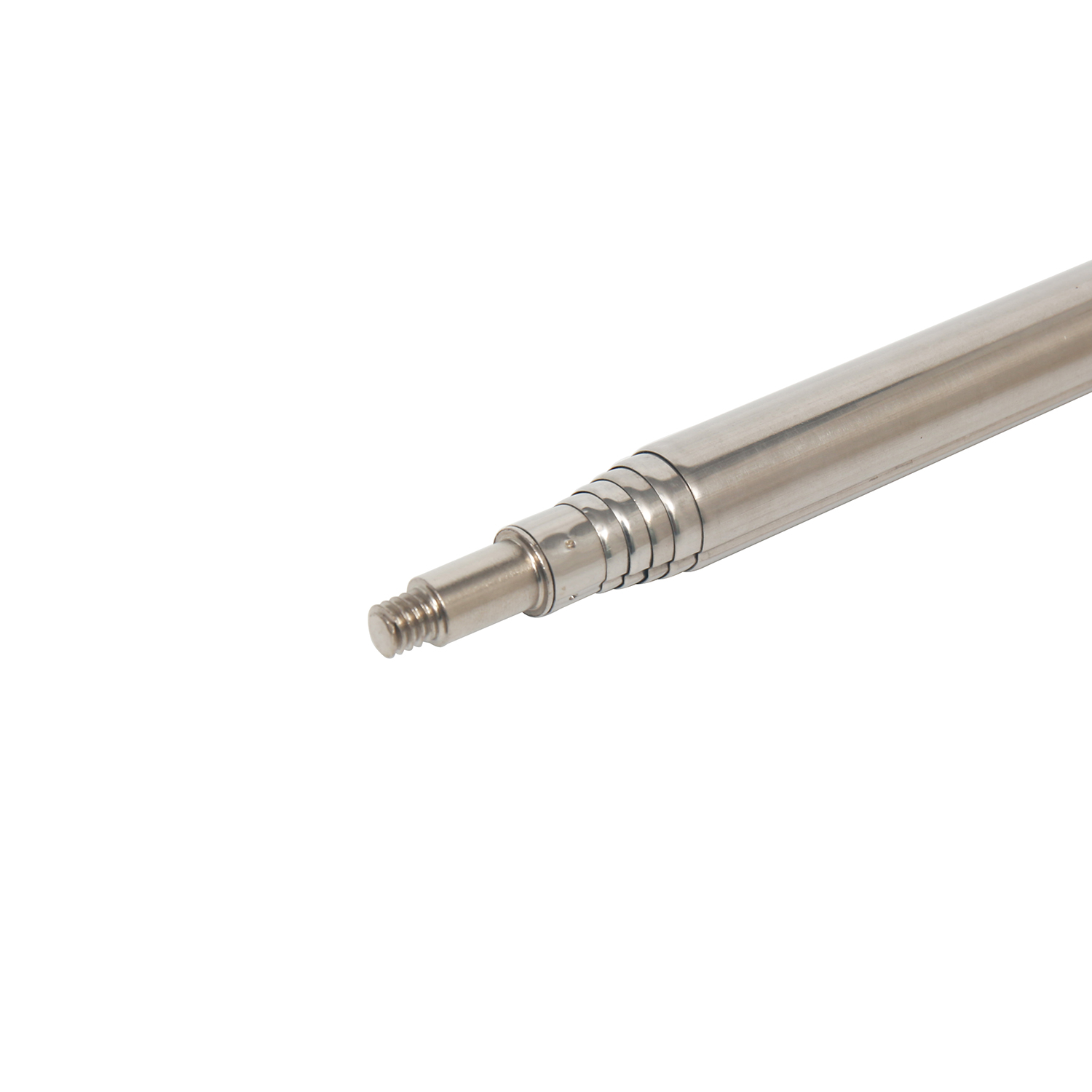
This guide breaks down the engineering, structural advantages, and implementation trade-offs of the stainless steel telescopic pole. You will gain an objective framework for evaluating your next equipment investment. We will explore material physics, locking mechanism integrity, and load capacities. You can then make confident procurement decisions tailored precisely to your specific operational needs.
Attach a heavy tool at the end of a 24-foot pole. You instantly create a severe lever effect. Soft materials bend aggressively under this massive torque. This bending action reduces precision drastically. Painters experience uneven pressure on rollers. Window cleaners lose vital squeegee contact. More importantly, deflection compromises safety. A swaying pole throws operators off balance. It makes overhead maneuvering unpredictable and highly dangerous.
Frequent extending and collapsing destroys budget equipment fast. Friction locks and internal pins rely entirely on tube structural integrity. Aluminum and plastic poles deform under repetitive compression stress. They warp out of round. This deformation prevents locking collars from gripping securely. Operators experience sudden tool collapses during active use. These unexpected drops cause injuries and damage expensive attachments.
Outdoor operations present harsh physical realities. Temperature fluctuations cause extreme expansion and contraction. Moisture attacks bare metals relentlessly. Chemical exposure destroys weak surfaces. Cleaning solvents turn fiberglass brittle over time. UV radiation degrades composite epoxies. Chrome-plated steel rusts quickly after minor surface scratches. Flimsy tools simply cannot survive these aggressive environmental factors for long.
Continuously replacing cheap poles drains your operational budget. Broken tools cause highly expensive downtime. Crews sit idle waiting for replacement gear. Unreliable equipment creates massive safety liabilities on job sites. Investing in a commercial-grade solution upfront solves these persistent business problems. Premium tools keep your crew working safely. They eliminate the constant cycle of buying inferior replacement parts.
Aluminum remains incredibly lightweight. Consumers love it for basic household tasks. However, it dents easily upon impact. Aluminum bends permanently under heavy lateral loads. Workers frequently strip the soft aluminum threads at the tool connection point. Stainless steel offers vastly superior tensile strength. It provides massive crush resistance. A dropped stainless pole survives intact. A dropped aluminum pole often bends beyond repair.
Fiberglass offers excellent electrical insulation properties. Electricians require it near power lines. Yet, fiberglass proves surprisingly heavy at longer extensions. Ultraviolet light degrades the external resin significantly over time. The material eventually splinters. These splinters cause severe hand injuries during operation. Stainless steel maintains a smooth, degradation-free surface forever. It never splinters or sheds dangerous micro-fibers into your hands.
Chrome-plated steel looks highly polished and professional initially. Do not let this fool you. Chrome is merely a cheap surface coating. Scratch the surface, and the underlying carbon steel rusts rapidly. Outdoor environments destroy chrome tools in weeks. Stainless steel is a true, solid alloy. It offers inherent corrosion resistance throughout the entire material. Deep scratches do not compromise its rust-fighting capabilities.
Structural rigidity and weather resistance matter most for professionals. Stainless steel proves optimal when you prioritize strength over absolute lightness. It eliminates the dangerous whip effect. It survives harsh chemical washes. It serves perfectly as a durable telescopic pole for demanding industrial applications. You trade a few pounds for absolute reliability.
Extension Material Comparison Breakdown
| Material Type | Tensile Strength | Corrosion Resistance | Primary Drawback | Best Application |
|---|---|---|---|---|
| Aluminum | Low to Medium | Good (if anodized) | Dents and bends easily | Lightweight indoor tasks |
| Fiberglass | Medium | High | Splinters, UV degrades | Electrical hazard areas |
| Chrome-Plated Steel | High | Poor (rusts if scratched) | Surface coating fails | Indoor display or light retail |
| Stainless Steel | Very High | Excellent (Alloy throughout) | Heavier physical weight | Heavy-duty outdoor/industrial |
You must select the correct metallurgical grade for your environment. 304 Stainless Steel acts as the universal industry standard. It handles general outdoor and commercial use perfectly. It offers excellent water and rust resistance for daily tasks. 316 Stainless Steel handles extreme, hostile environments. Marine applications require this upgraded alloy. It contains molybdenum. This addition resists highly corrosive industrial chemicals and saltwater spray effectively.
Evaluate the three primary lock types carefully. Cam locks offer rapid speed and variable heights. Internal friction locks provide a seamless, snag-free exterior profile. Push-button spring pins ensure absolute ultimate security under massive vertical loads. Rigid stainless steel walls make all these mechanisms perform better. The hard metal prevents the locking mechanism from grinding into the tube. It stops friction locks from slipping under pressure.
Heavy payloads demand exceptionally strong connection threads. Standard Acme threads remain the industry baseline. Ensure the manufacturer mills these threads from similarly durable metal. Plastic threads strip instantly under heavy torque. You must match the thread strength directly to the pole body strength. This prevents catastrophic cross-threading when you attach heavy cameras or industrial squeegees.
Stainless steel feels naturally smooth and dense. Bare metal becomes slippery when wet. Textured rubberized grips become absolutely mandatory for safe operation. Evaluate the base handle closely. Look for cold-weather handle wraps. Bare steel freezes hands quickly in winter conditions. Proper grip placement ensures balanced weight distribution. Good ergonomics vastly improve daily operator comfort and tool control.
We must address the primary drawback transparently. Stainless steel carries more physical mass. You feel this weight during overhead operations. You must manage this reality through smart operational protocols. Operators can use supportive body harnesses for extended shifts. Limit the continuous time spent at maximum extension. Choose tapered tube designs. Tapering reduces upper mass while maintaining base rigidity. This improves the overall balance point.
Thicker walls dramatically increase crush resistance and stiffness. They also add significant weight to the tool. Buyers face a critical balancing act here. You must weigh the outer diameter (OD) against the intended payload. Heavy tools require thicker walls to prevent deflection. Light tools allow for thinner walls to save operator energy. Match the wall thickness precisely to your specific tool weight requirements.
Off-the-shelf retail options frequently fail enterprise users. Non-standard operating lengths demand bespoke solutions. Specific load-bearing requirements need specialized engineering. Enterprise teams often utilize proprietary tool attachments. In these specific scenarios, you need a custom stainless steel pole. Evaluate your B2B manufacturer rigorously. Demand exact machining tolerances. Request custom locking collars. Ensure they guarantee consistency across large bulk orders.
Stainless steel telescopic poles require a distinctly higher initial investment. They definitely carry more physical weight than budget alternatives. However, their structural rigidity remains entirely unmatched in the market. Superior corrosion resistance and an extended operational lifespan make them vastly superior. They dominate heavy-duty extension tool categories for good reason. They eliminate dangerous whip effects and sudden collapses.
We strongly advise buyers to prioritize mechanical integrity. Focus heavily on the locking mechanism quality. Choose your specific steel grade carefully based on your environment. Ignore basic brand aesthetics and flashy colors completely. Base your final procurement decision on raw structural engineering and load-bearing data. This approach guarantees a safer, more efficient workflow for your entire team.
A: It is heavier than aluminum, requiring more physical effort. However, its rigidity means you spend less time fighting pole deflection, which can actually improve control and reduce secondary muscle strain during precision tasks.
A: High-quality 304 or 316 stainless steel is highly resistant to rust. However, surface staining can occur if exposed to certain chemicals or iron particles. It requires minimal maintenance compared to chrome or standard steel.
A: Yes, many B2B manufacturers offer custom fabrication, allowing you to specify exact collapsed/extended lengths, specific thread types, and specialized locking collars to fit proprietary equipment.
A: Spring-pin (button) locks offer the highest security against collapsing under heavy vertical loads, while heavy-duty cam-locks offer faster adjustability for variable heights. The choice depends on speed vs. load-bearing needs.